
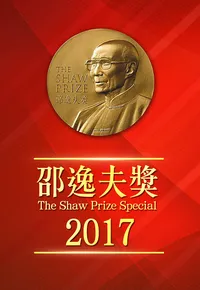
The Shaw Prize Special 2017
邵逸夫獎2017
Simon White of Germany receives the 2017 Shaw Prize in Astronomy. The Prize in Life Science and Medicine is shared equally by Ian Gibbons and Ronald Vale of the United States, while the Prize in Mathematical Sciences is shared equally by János Kollár of the United States and Claire Voisin of France, the first woman to win in this category. Each prize includes a certificate, a gold medal and US$1.2 million (about HK$9.32 million). Established in 2002 and awarded annually since 2004, the Shaw Prize recognizes outstanding achievements with far-reaching impact in astronomy, life science and medicine, and mathematical sciences. It aims to encourage and support researchers worldwide. The award ceremony will take place in Hong Kong on September 26. Simon White is recognized for advancing our understanding of how structures form in the universe. Using powerful numerical simulations, he showed how tiny density fluctuations in the early universe developed into the galaxies and other nonlinear structures visible today. He also provided strong evidence for a model of the universe with flat geometry, dominated by dark matter and the cosmological constant. First proposed in the 1930s, dark matter has drawn more attention over the past 20 years. It neither emits nor reflects light, but its gravitational effects are closely linked to the formation of the universe and even to the origins of life. Ian Gibbons and Ronald Vale are recognized for discovering microtubule-associated motor proteins, which drive nerve cell growth and chromosomal inheritance, both essential to human development. Without these motors, multicellular growth and division would be impossible. Motor protein genes are linked to neurological disorders, schizophrenia and neurodegenerative diseases, and studying motor proteins can help researchers investigate drugs that slow cell division. János Kollár and Claire Voisin are recognized for outstanding work in several core areas of algebraic geometry that has helped solve some long-standing problems.
Episodes
2 episodes
More like this

News At 6:30
21 Nov 2026

TVB Entertainment News
21 Nov 2026

Scoop
21 Nov 2026

TVB Entertainment News
27 May 2025

Financial Magazine
15 Nov 2026
Sunday Report
15 Nov 2026

News Magazine
14 Nov 2026
J Sport
Ep 129

TV Awards Presentation 2025
Completed · 1 ep

Scoop Review 2025
Completed · 3 eps

TVB Entertainment News
31 Dec 2025
2025 Financial Review (ViuTV)
Completed · 1 ep

Hong Kong Review 2025 (TVB)
Completed · 1 ep
Financial Review 2025 (TVB)
Completed · 1 ep